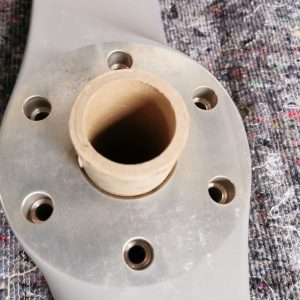
The Sensenich Propeller – P/N 74DM6-0-60
The shortened Sensenich 74DM6 Propeller description can improve search visibility, while the complete part number should remain available for technical review.
Fixed-pitch construction provides established blade geometry without a pilot-controlled in-flight pitch-change mechanism.
Whether buyers require a 74-Inch Aircraft Propeller, 60-Inch Pitch Propeller, Lycoming O-320 Propeller, or General Aviation Propeller, aircraft-specific applicability remains essential.
A Two-Blade Aircraft Propeller should be treated as one matched rotating assembly, while a Sensenich Aircraft Propeller should be identified through verified manufacturer markings.
Why the Complete Propeller Designation Matters
A propeller should not be accepted as P/N 74DM6-0-60 solely because it resembles another Sensenich model shown in a catalog or online advertisement.
The buyer should determine whether the propeller remains in its original manufactured configuration or has undergone any pitch adjustment, diameter reduction, refinishing, inspection, trial fitting, repair, or alteration.
Evaluating an Unused Sensenich Propeller
The phrase new and never installed generally means that the propeller has not been operated in flight or permanently mounted on an aircraft.
A never-installed statement may be supported by the absence of operational erosion, mounting impressions, spinner contact, bolt marks, and documented operating time.
Sensenich Fixed-Pitch Propeller Design
A fixed-pitch propeller uses blade geometry manufactured or adjusted for a defined range of engine and aircraft operating conditions.
Fixed-pitch simplicity can reduce mechanical complexity compared with variable-pitch or constant-speed systems, but it does not eliminate inspection, balance, tracking, and maintenance requirements.
Aluminum Aircraft Propeller Construction
Even a new and never-installed propeller should be checked for handling marks, coating defects, scratches, dents, and environmental exposure.
Harsh cleaners, abrasive pads, unapproved polishing, and uncontrolled sanding should be avoided because they may damage the finish or alter blade surfaces.
Confirming the Propeller Diameter
Propeller diameter affects ground clearance, tip speed, engine loading, airframe clearance, and aerodynamic performance.
Blade-tip shape, symmetry, and previous alteration can influence measurement accuracy.
Blade Pitch and Engine Loading
The seller should not guarantee specific performance based only on the pitch designation.
Both blades should maintain suitable pitch consistency, contour, and dimensional symmetry.
Selecting an Approved Propeller Installation
Compatibility depends on the exact aircraft model, serial range, engine designation, propeller approval, hub, bolt pattern, diameter, pitch, and operating limitations.
The engine and propeller combination must remain within applicable RPM and power limitations.
Evaluating Both Propeller Blades
Blade comparison should include the faces, backs, roots, leading edges, trailing edges, tips, and hub transitions.
Storage supports should protect both blades without applying uneven pressure.
Inspecting the Propeller Mounting Area
The mounting face should remain clean, flat, protected, and free from defects that could prevent correct seating.
Professional hardware selection protects the engine and Replacement Aircraft Propeller.
Leading-Edge and Blade-Surface Inspection
Professional evaluation protects the Sensenich Aircraft Propeller from unsuitable installation.
Unauthorized sanding, filing, blending, refinishing, or polishing should be avoided.
Identifying Moisture-Related Damage
Aluminum propellers can develop corrosion after exposure to moisture, condensation, coastal air, chemicals, damaged coatings, or unsuitable storage materials.
Protective covers should prevent contamination and impact without encouraging condensation around the aluminum.
Separating Certification from Current Condition
Certified design status does not automatically establish the present serviceability, airworthiness, or installation eligibility of an individual propeller.
A release certificate or service tag belonging to another serial number does not establish the condition of the offered unit.
Maintaining Aircraft Propeller History
The manufacturer data plate should remain legible, securely attached, and consistent with the physical propeller, invoice, packaging, and supplied documents.
Paperwork should not be interpreted beyond its actual scope or current relevance.
Evaluating a New Never-Installed Propeller
The seller should provide photographs of both sides of each blade, leading edges, trailing edges, tips, hub, mounting holes, data plate, packaging, and any damaged areas.
- Resolve identity, applicability, dimensions, condition, and package-completeness questions before payment.
- Review the history for trial fitment, dropped handling, transportation impact, moisture exposure, chemical contamination, improper storage, or unauthorized repair.
- Inspect and photograph the propeller immediately after delivery before cleaning, measuring, balancing, repairing, mounting, or modifying it.
Safe Freight Handling Procedures
Blade tips, leading edges, trailing edges, mounting surfaces, bolt holes, identification plates, and factory coatings require suitable protection.
Pre-shipment photographs can document the blades, hub, packaging, identification, and included parts before collection.
Preventing Corrosion and Handling Damage
Storage supports should avoid concentrating weight on blade tips, edges, or thin blade surfaces.
The unit should not be stored directly on damp concrete, exposed ground, unstable shelving, or areas vulnerable to roof leaks.
Professional Installation Requirements
The engine flange, pilot fit, mounting surfaces, threads, bolt holes, and related components should be more info inspected before assembly.
Spinner components should maintain suitable alignment, attachment, and clearance without causing stress or imbalance.
After installation, technicians should verify security, propeller clearance, blade tracking, spinner alignment, hardware condition, and surrounding aircraft components before starting the engine.
Preventive Blade and Hub Inspection
Small nicks, scratches, coating damage, loose spinner parts, unusual vibration, or fluid exposure should receive timely attention.
The propeller should receive additional inspection after a suspected strike, sudden engine stoppage, overspeed, severe vibration, loose installation, lightning-related concern, or transportation impact.
Choosing a Valuable Aviation Component
Honest information strengthens buyer confidence and reduces disputes.
Availability of qualified maintenance support and approved installation data can influence long-term ownership value.
74DM6-0-60 Aircraft Propeller Conclusion
New, Never Installed may suit aircraft owners, maintenance organizations, builders, propeller specialists, restorers, aviation dealers, and general aviation operators seeking an identifiable unused component.
Buyers should request current photographs, exact dimensional information, transparent condition disclosures, inspection details, protected freight arrangements, secure payment terms, and qualified propeller review.
Whether the propeller is purchased for replacement, restoration, new construction, spare inventory, resale, or an aircraft project, transparent information and qualified oversight provide the strongest foundation.
New, Never Installed can deliver a professional combination of fixed-pitch simplicity, aluminum construction, replacement value, and general aviation application potential.